
Nubian Food & Music: The Living Culture of Egypt's South
Nubian food is generous, homely and built for sharing: slow-cooked tagines, fragrant rice, fresh flatbread, dates, and karkade — deep-red hibiscus tea served hot or iced. On our village visits a host family cooks the meal and you eat it in their home, seated together on cushions, rather than in a restaurant with a Nubian theme. The music runs on the duff drum, hand-clapping and call-and-response singing, and most visits end with travellers dancing with their hosts. The villages sit along the Nile just south of Aswan, on the west bank and on islands such as Gharb Soheil, a short boat ride past the granite islands and Elephantine.
Egypt's ancient stones are only half the story. In the Nubian south, around Aswan, you find a living African culture with its own language, flavours and rhythms — and a meal in a Nubian home is the part of a heritage trip travellers describe years later, when the temples have started to blur together.
What Nubian food is
Nubian cooking is generous and homely rather than showy: slow-cooked tagines, fragrant rice, fresh flatbread and dates. It is food built for sharing from the middle of a table, and it arrives all at once rather than in courses.
Karkade, the drink you will be handed first
Before anything else there is karkade — hibiscus tea, deep red, served hot or iced depending on the month. It is the opening gesture of Nubian hospitality, and accepting it when it is offered goes a long way. In the summer heat of the deep south, the iced version is the correct answer.
Eating with a host family, not at a restaurant
This is the distinction that matters, and it is worth checking before you book anything. On our visits a host family cooks the meal and you eat it in their home, seated together on cushions — it is not catered in and it is not a restaurant with a Nubian theme.
The music: duff, clapping and call-and-response
Nubian music is joyful and hypnotic, built on the duff drum, hand-clapping and call-and-response singing. It is impossible to sit still through. Most village visits end with the music, and with travellers up and dancing with their hosts — which is usually the moment somebody in the group stops being a visitor.
The colour, and why everything is painted
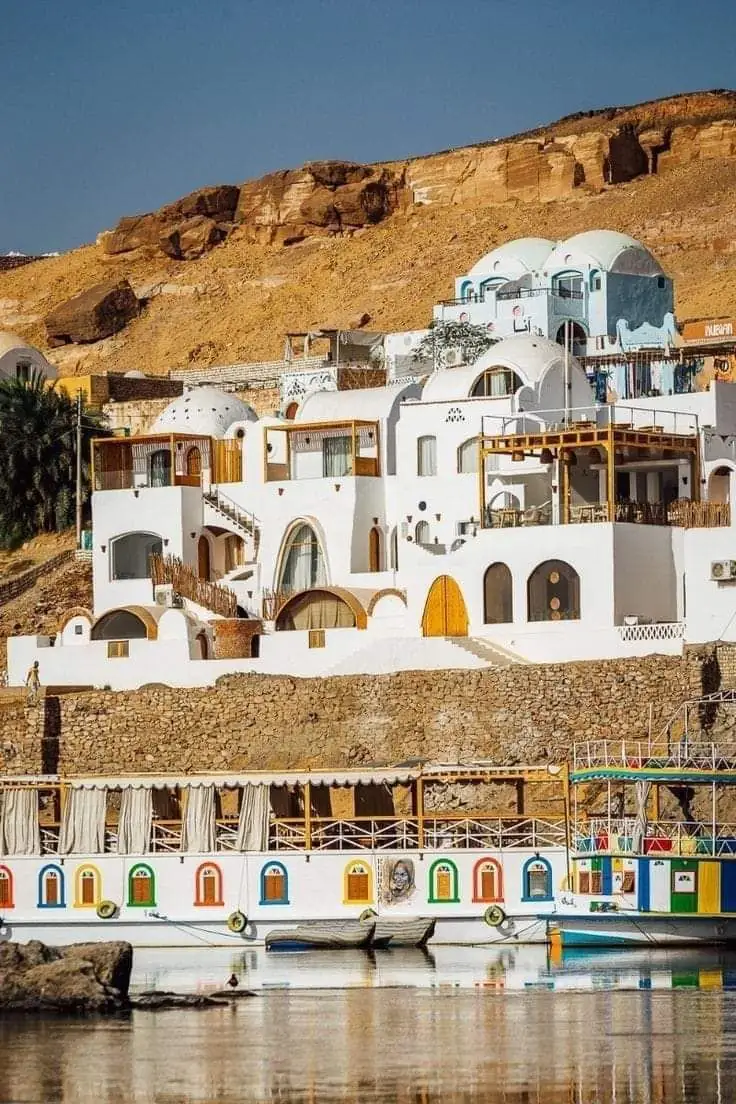
Nubian homes are painted in brilliant blues, yellows and pinks, decorated with domes and patterns. It is one of the most photogenic places in Egypt and a direct thread to a distinct African heritage. Ask before photographing people, though, particularly inside a home.
Where to experience it
The Nubian communities sit along the Nile just south of Aswan, on the west bank and on islands such as Gharb Soheil, reached by a short boat ride past the granite islands and Elephantine. Almost everyone experiences the food and music as part of an afternoon in a living Nubian village, which pairs naturally with the island Temple of Philae in the morning and a felucca sail at golden hour.
For the history behind the culture, the Nubian Museum in Aswan is the other half of the same story, and worth a proper hour. Our Kemet & the Black Pharaohs journey runs 8 days from $1,460 USD and is built to spend real time in the villages rather than call in on the way past.
Experience living Nubian culture on a heritage journey.
See our Aswan & Nubia toursFrequently Asked Questions
What is Nubian food like?
Generous and homely rather than showy: slow-cooked tagines, fragrant rice, fresh flatbread, dates and karkade (hibiscus tea). It is built for sharing from the middle of the table and arrives all at once rather than in courses.
What is karkade?
Hibiscus tea — deep red, served hot or iced depending on the month, and the first thing you are handed in a Nubian home. In the summer heat of the deep south the iced version is the right answer.
Who cooks the meal on a village visit?
On our visits a host family cooks it and you eat in their home, seated together on cushions. It is not catered in and it is not a restaurant with a Nubian theme — worth checking before you book anything.
What is Nubian music?
Joyful, rhythmic music built on the duff drum, hand-clapping and call-and-response singing. Most village visits end with the music, and with travellers up and dancing with their hosts.
Where are the Nubian villages?
Along the Nile just south of Aswan, on the west bank and on islands such as Gharb Soheil, reached by a short boat ride past the granite islands and Elephantine.
Can I take photographs in the village?
Yes, and it is one of the most photogenic places in Egypt — but ask before photographing people, particularly children and particularly inside a home. It is somebody's house, not a set.
Cite this page
Mohammed Hossam (2026). “Nubian Food & Music: The Living Culture of Egypt's South”. Egypt Top Light Travel. https://egypttoplight.net/blog/nubian-food-and-music, updated 4 August 2026.
You are welcome to quote or reference this page. A link back to the source is appreciated.